
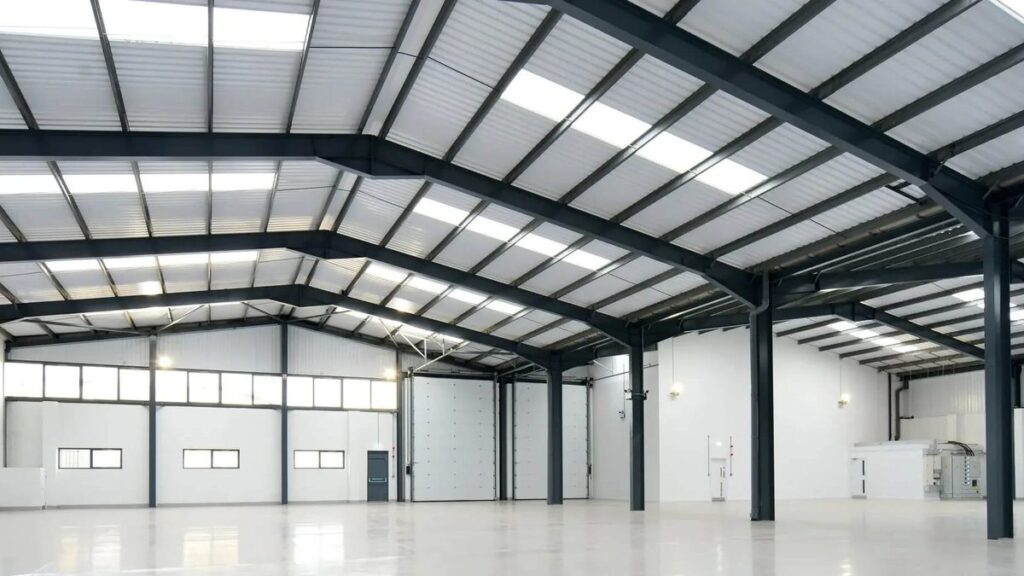
An empty warehouse still costs money every month, even when nobody is using it. The tax bill, the insurance, the utilities and the upkeep keep coming, and some cities add rules of their own once a building sits empty. This post covers three things the owner of a vacant industrial building should know before selling: when a building counts as vacant, what two large cities require of vacant buildings, and how a long vacancy can shrink an insurance policy. It ends with the main ways to sell an empty building.
When Does a Warehouse Count as Vacant?
There is no single answer, because each city and each insurance policy uses its own test. In Philadelphia, a commercial property needs a license once it has been vacant for more than three months and no construction work is happening or scheduled. In Chicago, a non-residential building counts as vacant once substantially all lawful business operations have ceased, and it must be registered within 30 days. The City of Chicago adds that the presence of a guard or watchman does not mean a building is occupied.
An insurance policy can use a different test again. In a commercial property policy quoted in an unpublished June 2026 opinion of the Michigan Court of Appeals, a building insured by its owner was vacant unless at least 31% of its total square footage was rented to a tenant using it for customary operations and/or used by the owner for customary operations. So a large building with only a small part in use can still count as vacant under that kind of wording. It is worth reading the definition in your own policy before assuming a half-used building is safe.
Philadelphia: A License and a Bond for an Empty Commercial Building
The Department of Licenses and Inspections issues the Vacant Commercial Property License. To get it, the owner must post a bond to cover the City’s potential cost of correcting code violations or resolving unsafe or dangerous conditions. The bond amount depends on the total square footage of the vacant building, not counting the basement.
| Vacant building size | Bond required |
|---|---|
| Less than 50,000 square feet | $50,000 |
| 50,000 to 200,000 square feet | $100,000 |
| More than 200,000 square feet | $500,000 |
The City accepts a letter of credit as an alternative where a bond is required. It lists a license fee of $202, and the license must be renewed every year the property is vacant. For an owner who plans to sell, the bond and the yearly renewal add to the cost of holding an empty building. An owner selling a warehouse in Philadelphia should check whether the building has passed the three-month mark with no construction work happening or scheduled, because that is when the license applies. Ask your attorney what that means for your building.
Chicago: Secure, Insure, Register, Post a Sign
The Chicago Department of Buildings lists what the owner of a vacant building in the City of Chicago is required to do.
- Keep it secured. All openings must be secured to prevent unlawful entry.
- Get it insured. Proof of liability insurance with a specified minimum coverage is required at the time of registration.
- Then register it. Registration costs $250 to $500, and the fee is higher if the City has already found the property in violation of the vacant building requirements.
- Put up a sign. The sign must be visible from the nearest street and show the name, street address and phone number of the owner or the owner’s agent, plus the vacant building registration number.
- Keep it up. The owner must maintain the property, visit regularly to make sure it is clean and secure, and renew the registration every six months for an additional fee.
The City’s owner sheet, revised in December 2021, listed a $1,000,000 minimum liability coverage for commercial structures. That same sheet listed a registration fee of $30 to $100, while the City’s current FAQ lists $250 to $500, so confirm the current insurance amount with the Department of Buildings as well. The 2021 sheet also says plywood may be used only during the first six months a building is vacant, and that plumbing and heating systems must be maintained or winterized. If an owner does not fix violations, the City may seek significant fines or obtain authority to board up or demolish the building. An owner selling a warehouse in Chicago must also deregister the building within 20 days of the sale.
The Insurance Gap: The Vacancy Condition
A commercial property policy can change once a building has been empty for a set number of days. In the policy quoted in a 2019 memorandum decision of the Supreme Court of Appeals of West Virginia, if the building had been vacant for more than 60 consecutive days before a loss, the insurer would not pay for vandalism, sprinkler leakage unless the system was protected against freezing, building glass breakage, water damage, theft or attempted theft. For other covered causes of loss, that policy reduced the payment by 15%. Under West Virginia law, the same court had already held that a provision cutting by 15% the coverage payable for the total loss of a building destroyed by fire was enforceable where the building had been vacant for more than 60 consecutive days.
The Michigan Court of Appeals case shows how this plays out in a large building. The building was a bowling alley of approximately 48,000 square feet, and a pipe feeding its fire-suppression sprinkler burst after freezing. The policy did not cover sprinkler leakage, unless the system was protected against freezing, if the building had been vacant for more than 60 consecutive days. The insured business, which leased the whole building from its owner, conceded it had not protected the sprinkler pipes against freezing, and the court found that no reasonable juror could conclude the building was not vacant under the policy, so the insurer had not breached the contract.
Every policy is worded differently, so read the vacancy condition in your own policy and ask your insurance agent what changes while the building is empty. Ask the agent too whether coverage can be added back for the time the building sits empty. In winter, keeping the heat on and the sprinkler system protected matters for the building and for the claim. This is general information, not insurance or legal advice.
What an Empty Warehouse Keeps Costing
A vacant building earns no rent, but most of its costs keep coming. The property tax bill still arrives. The insurance still has to be paid, and after a long vacancy it may cover less than the owner expects. The roof, the doors, the lot and the fire protection still need attention, because a break-in or a frozen pipe can turn into a large repair. Some cities add their own license, bond or registration on top. Each month the building sits empty, these costs come out of the owner’s pocket with no rent to offset them. That is often what pushes an owner to decide between filling the building and selling it.
Your Options for Selling a Vacant Warehouse
An empty building has one real advantage: it suits a buyer who wants to move a business in, because there is no tenant to work around. Here are the main routes an owner can take.
- Sell it through a broker. A broker markets the building and charges a commission, and the carrying costs keep running while the listing is open.
- Sell it yourself. You avoid a commission but take on the marketing, the showings and the paperwork.
- Sell it to a direct buyer. Selling directly to a buyer is faster than listing, because there is no marketing period and no waiting for a buyer to appear.
- Find a tenant first, then sell. A signed lease can make the building more attractive to some buyers, but finding a tenant takes time and often money for improvements, and the vacancy costs keep running in the meantime.
Before you sell by any route, gather the deed, the recent tax bills, any survey and any environmental reports you already have, plus any city license or registration papers for the vacancy. Every property is different.
Questions Owners Ask
Can I sell a vacant building for cash?
Yes. We buy buildings that are leased to tenants, owner-occupied, or vacant.
Do I have to fix up an empty warehouse before I sell it?
No. We buy as-is, so you do not have to make repairs or upgrades first. Condition does not rule a property out.
Does a vacant building have to be registered before it is sold?
It depends on the city. The rules are triggered by the vacancy, not by the sale. In Philadelphia, the license applies once a commercial property has been vacant for more than three months with no construction work happening or scheduled. In Chicago, a vacant non-residential building must be registered within 30 days, and the registration must be ended within 20 days after a sale.
Will my insurance still cover an empty building?
Check the vacancy condition in your policy. In both policies quoted by the courts above, coverage for several kinds of loss stopped once the building had been vacant for more than 60 consecutive days.
Tell us about your property and we’ll get back to you. Asking for an offer is free, and you are not committed to anything unless you sign a purchase agreement.
Sources
Facts on this page come from the public sources listed at the bottom, read on the dates shown.
- City of Philadelphia, Get a Vacant Commercial Property License, web page (read 2026-10-14).
- City of Chicago, Department of Buildings, Vacant Buildings FAQ, web page (read 2026-10-14).
- City of Chicago, Department of Buildings, Vacant Building Owner Requirements, Revised 12/2021 (read 2026-10-14).
- Michigan Court of Appeals, Cherry Hill Recreation Center, Inc. v Conifer Insurance Company, No. 374445 (unpublished opinion), June 18, 2026 (read 2026-10-14).
- Supreme Court of Appeals of West Virginia, Ashraf v. State Auto Property and Casualty Insurance Company, No. 18-0382 (memorandum decision), filed May 20, 2019 (read 2026-10-14).